- Main Differences
The temperatures mentioned here do not refer to the temperature generated when charcoal is burning. They mainly refer to the carbonization temperature used during the production process.
Generally, the higher the carbonization temperature, the higher the degree of carbon purification. Higher-temperature carbonization results in higher fixed carbon content, fewer impurities, and lower levels of volatile matter.
- Carbonization Temperature Low-Temperature Charcoal
Carbonization temperature: Around 380°C Fixed carbon content: Approximately 60% or higher
Medium-Temperature Charcoal
Carbonization temperature: 400–650°C, typically around 600°C Fixed carbon content: 70% or higher
Medium-High-Temperature Charcoal
Carbonization temperature: 650–750°C or higher Fixed carbon content: 80% or higher
High-Temperature Charcoal
Carbonization temperature: 800°C or higher Fixed carbon content: 85% or higher
- How to Identify Charcoal by Appearance Low-Temperature Charcoal
The cross-section is relatively loose and porous, with low hardness. It can be easily crushed or broken by hand. When tapped, it produces a relatively dull sound and generally has little or no metallic luster.
Medium-Temperature Charcoal
Its appearance is not significantly different from low-temperature charcoal. However, charcoal of the same size will generally feel noticeably heavier when held in the hand.
Medium-High- and High-Temperature Charcoal
These types of charcoal are dense and hard, and feel noticeably heavier. They can sink in water and generally have a metallic luster on the surface. When tapped, they produce a clear, crisp sound similar to that of metal.
- Differences in Burning Performance
Generally, the higher the carbonization temperature, the denser and longer-burning the charcoal, but the more difficult it is to ignite.
Low-Temperature Charcoal
It is relatively easy to ignite and is suitable for starting fires. However, it has a shorter burning time, relatively weak heat output, and produces more ash. In some cases, it may also produce smoke during combustion.
Medium-Temperature Charcoal
Its performance is similar to that of low-temperature charcoal, but it generally provides a longer burning time. It is mainly used for barbecue charcoal.
Medium-High- and High-Temperature Charcoal
These types are relatively difficult to ignite, but once fully ignited, they provide excellent burning performance and long-lasting heat.
Their approximate burning duration can be around three times that of low-temperature charcoal and twice that of medium-temperature charcoal. They provide stable heat and generally produce very little smoke and odor.
- Differences in Applications Low-Temperature Charcoal
Mainly used for heating and industrial applications.
Medium-Temperature Charcoal
Suitable for barbecuing, heating, and hot pot applications.
Medium-High-Temperature Charcoal
Suitable for premium barbecue applications, Japanese restaurants, and export markets where higher-quality charcoal is required.
High-Temperature Charcoal
Suitable for roasting spices, herbs, medicinal materials, and other applications that require clean and stable heat.
High-temperature charcoal offers low smoke, low odor, and clean combustion, making it suitable for applications where maintaining the original flavor and minimizing contamination are important.
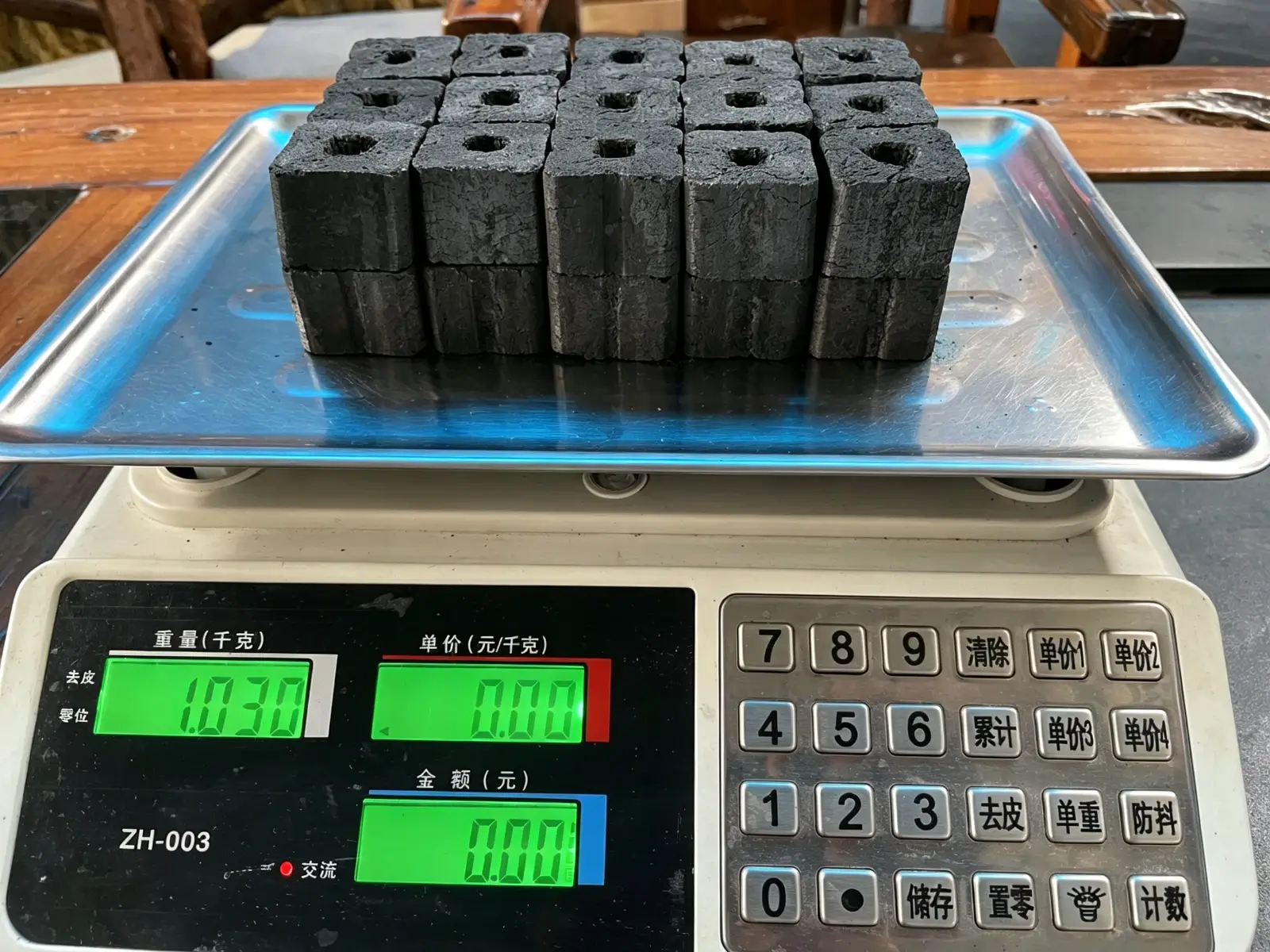
img 02 charcoal scale